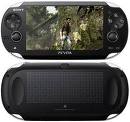
From the news is expected PS Vita will be present with two models namely, PS Vita editioan Wi-Fi and 3G & Wi-Fi are both slated for release on 28 October.
A spokesman for Sony, as quoted PULSAonline via IGN, said it would launch 'a gradual global release "during the holiday season, but would not confirm a specific date.
In the United States, the PlayStation game console Vita known price, which is about $ 249.99 (Rp2, 1 million), while for PS Vita AT & T's 3G version will be available with a tag of around $ 299.99 (Rp2, 5 million).

No CPU requirements for Android 3.0 Honeycomb? Yeah, right…
Google is such a tease, at least as far as Android 3.0 Honeycomb is concerned. Yesterday, a video went out on the Android Developers’ YouTube channel that, well, teased some of the new stuff that will come in Honeycomb. And, at some point after that, Google’s head of Android, Andy Rubin, decided to write a blog post on the Google Mobile Blog that basically reiterates most of the things we’ve seen in the video.
In case you have been living under a rock, or for some reason just haven’t read our post about the video (and you really should), here’s the gist of it, as well as of Google’s blog post. Honeycomb will bring refined multitasking, more elegant notifications, a new ’3D’ experience for homescreen customization, and new, richer and more interactive widgets. The web browser will also be improved upon, with tabs, syncing with Google Chrome bookmarks, form auto-fill and an incognito mode for private browsing. And finally, Google Talk in Honeycomb will let you video and voice chat with people using PCs, tablets, and whatnot.
Do note one thing though: neither the video, nor the blog post constituted an official announcement of Honeycomb. In fact, they both count as previews. Which may mean that Honeycomb is still weeks, if not months away from being finished and ready to ship. If you’re not convinced, consider that there’s no Honeycomb ‘statue’ in the Google campus, and Gingerbread was finally officially released many weeks after the Gingerbread statue made its appearance.
Dan Morrill, Google’s Android Open Source & Compatibility Tech Lead, answered one of the key questions about Honeycomb late yesterday by tweeting that there will be no ‘hard’ minimum processor requirement for Honeycomb. Note his choice of words: “no hard … requirement”.

Now why does that sound familiar?
Because last summer he said more or less the same thing, in reply to a post by our own Staska who was quoting famous Russian blogger Eldar Murtazin’s statements about the ‘next major version of Android’ (that we now know is Honeycomb, and not Gingerbread; it is 3.0 though). Many of the things that Murtazin said back then panned out, including the branching of Android into two. Perhaps the only thing that didn’t happen was the launch in 2010, but that can perhaps be attributed to Murtazin’s sources mixing up Gingerbread with Honeycomb, as, judging from the state that Honeycomb is in even today, it’s rather unlikely that Google had at any time hoped to get it out last year.
Last summer, Eldar Murtazin clarified his statements to mean that there won’t, in fact, be any minimum requirements, but recommended hardware.
Which brings us back to the present, when Morrill’s tweet basically implies the same thing.
So, in other words, if you’d like to create a Honeycomb tablet with a 128 MHz processor, Google won’t stop you. BUT, and this is essential, we’re willing to bet that you would not get access to the Android Market and the Google Apps. Just like, unless you were Samsung, you didn’t get any of those if you created a tablet that runs anything other than Honeycomb.
So, nothing’s stopping you from putting a 128 MHz processor on a Honeycomb tablet, but Google will only be your friend if you go dual-core. Or something to that regard.
And believe it or not, this actually makes sense. As Android is open source, Google can’t stop you from using it on anything you like and however you like. They can, however, not offer you their apps, which aren’t open source. And the user experience on a Honeycomb-powered tablet with a 128 MHz processor would clearly be abysmal, so this is the only way that Google can try and control that to a certain extent.
I just wish they’d outright say it.

Verizon LG Ally Upgrades to Android 2.2 Froyo
For every 20 times we bag on Android device manufacturers for taking forever to upgrade to the next version, there’s 1 time that they actually come through by providing us with that firmware upgrade. This is the one time out of the twenty, as Verizon has now announced the LG Ally is ready to receive the Android 2.2 update, also known as Froyo.
We definitely are grateful for any updates on Android devices, but we also have to say: after being released in May 2010, it’s about time.

In case the picture above is too small, here are the improvements coming in the new update:
- Remote device wipe and additional security measures on passwords
- Bluetooth voice dialing
- Long-pressing the home key will bring up most recent applications
- Enhanced browser performance/faster loading of Javascript pages
- Instant data re-connection after voice call
- LG Social Application
- Updated contact directory complete with a combination of Google and corporate accounts
- Enhanced screen rotation up to 270 degrees
If you pack an Ally, be sure to keep an eye out for the update! If you are now suddenly interested in the LG Ally because it now has Froyo, you can get the LG Ally on Amazon for .01

Verizon to Launch HTC Thunderbolt & New Samsung 4G LTE Smartphone This February - This February seems to be rich with many a new launch gearing up to happen. Besides the many announcements likely at the Mobile World Congress that will get underway in Barcelona on February 14th, a few other launches also are being lined up during the month. Verizon is making the most of the hot February season, it seems, by bringing to their users two new devices – the HTC Thunderbolt and a yet-to-be revealed Samsung 4G LTE smartphone.

By the end of February, that means post-MWC, Verizon will be launching these two smartphones on their network. Going by a rumor, the two new Android smartphones are expected to arrive on Verizon around the same time.
Verizon has already hinted at this through their marketing documents. While the HTC Thunderbolt will be a smartphone with a 4.3 inch display and a 1.2GHz processor, we are yet to learn what would make the upcoming Samsung 4G LTE device a significant device.
The HTC Thunderbolt will come with Android 2.3 Gingerbread, Qualcomm MSM8960 dual-core processor 1.2 GHz, an eight megapixel camera, and also a front-mounted 5 megapixel camera.
As mentioned, Verizon’s marketing materials have been doing the rounds heralding the arrival of these two smart handsets on their network.

Verizon Getting the Apple iPhone 4 Next Month: It's Official
After literally years of rumors, leaks, and
speculation, Verizon Wireless has just made it official: it's going to
start offering a version of the Apple iPhone 4 in February.

device is going to have a great deal in common with the one that
AT&T began offering last summer, including the "Retina" display
and a front-facing camera, allowing users to make video calls.
3G Not 4G
Despite what some of the early rumors
said, the upcoming version will not support Verizon's new 4G network
which uses the LTE standard. Instead, it will offer this carrier's 3G
service.
Speaking at today's announcement, Tim Cook, Apple's COO, said that
including LTE in this device would have required too many design changes
and slowed the release.
Still, Verizon's version will have a significant difference from
AT&T's: it will include mobile hotspot software, allowing it to
share its 3G wireless connection with other WiFi-enabled computers.
There will be an extra monthly charge for this, though.
But this version will have a drawback: it won't provide simultaneous
voice and cellular data. When on a call, users won't have access to 3G
wireless data services. Wi-Fi connections will still function, of
course.
Verizon's CEO Lowell McAdam spent part of today's announcement event
talking about how his company has increased the data capacity of its
network in recent months to prepare for the launch of the iPhone 4. It
is hoping to avoid the problems AT&T has had meeting customers'
demand for wireless data.
Pricing and Availability
The Apple iPhone 4 is
going to debut from Verizon on February 10. Current Verizon customers
are going to get a chance to pre-order this model on February 3.
There will be two versions: one with 16 GB of storage will sell for
$200 with a two-year wireless service contract, while the 32 GB version
will go for $300 with contract. These are the same prices AT&T
charges.
It will be sold at the 2,000 Verizon Wireless Communications Stores nationwide, www.verizonwireless.com/iphone, Apple Retail Stores, www.apple.com, and at Apple Authorized Resellers.
A Shake-up Is Coming
This one move will likely have a noticeable effect on the entire U.S. mobile market.
The iPhone is the 500-pound gorilla of smartphones, making Apple's
iOS one of the most used mobile operating systems even when it was only
available from AT&T. Verizon has more subscribers than its rival,
potentially more than doubling the number of iPhones on the market.
Over the last year, Verizon has sold millions of Android OS-based
models. It's quite possible that many of these customers will switch to
an iPhone, cutting into sales of devices from Motorola, HTC, and
Samsung.
AT the same time, many analysts have predicted that large numbers of
AT&T subscribers are going to switch to Verizon, as they were only
staying with AT&T to get Apple's popular smartphone.
Additional Details on the Apple iPhone 4
Verizon's
and AT&T's versions of Apple's latest smartphone are virtually
identical. They both runs iOS 4.2 on the 1 GHz Apple A4 processor.

Its rear-facing camera has a 5 megapixel resolution and an LCD flash.

Verizon iPhone Price – The 16GB verison of the Verizon iPhone 4 price is $199 with a two year contract while the 32G version will be priced at $299, again with a two year contract.
Verizon iPhone Realease Date – Current Verizon customers can begin preordering their new Verizion iPhone on February 3rd 2011,l before it goes on general sale on February 10th.
No 4G for the Verizon iPhone Yet – Verizon have recently debuted their ultra fast 4G LTE network but the iPhone wont be on it – as of now, Apple says customers were not willing to wait for the Verizon iPhone long enough for the kinks involved to be worked out.
The Verizion iPhone is a Real Hotspot – The Verizon iPhone will be able to act as a mobile hotspot for up to five other devices.
The Verizon iPhone User cant Surf and Talk – Because it is a CDMA device users of the Verizon iPhone wont be able to surf the net and talk at the same time.
Despite its CDMA limitations there is still plenty of interest in the Verizon iPhone. I have spoken with a lot of people who intend to be first in the line for a Verizon iPhone on February 10th. Are you one of them too?